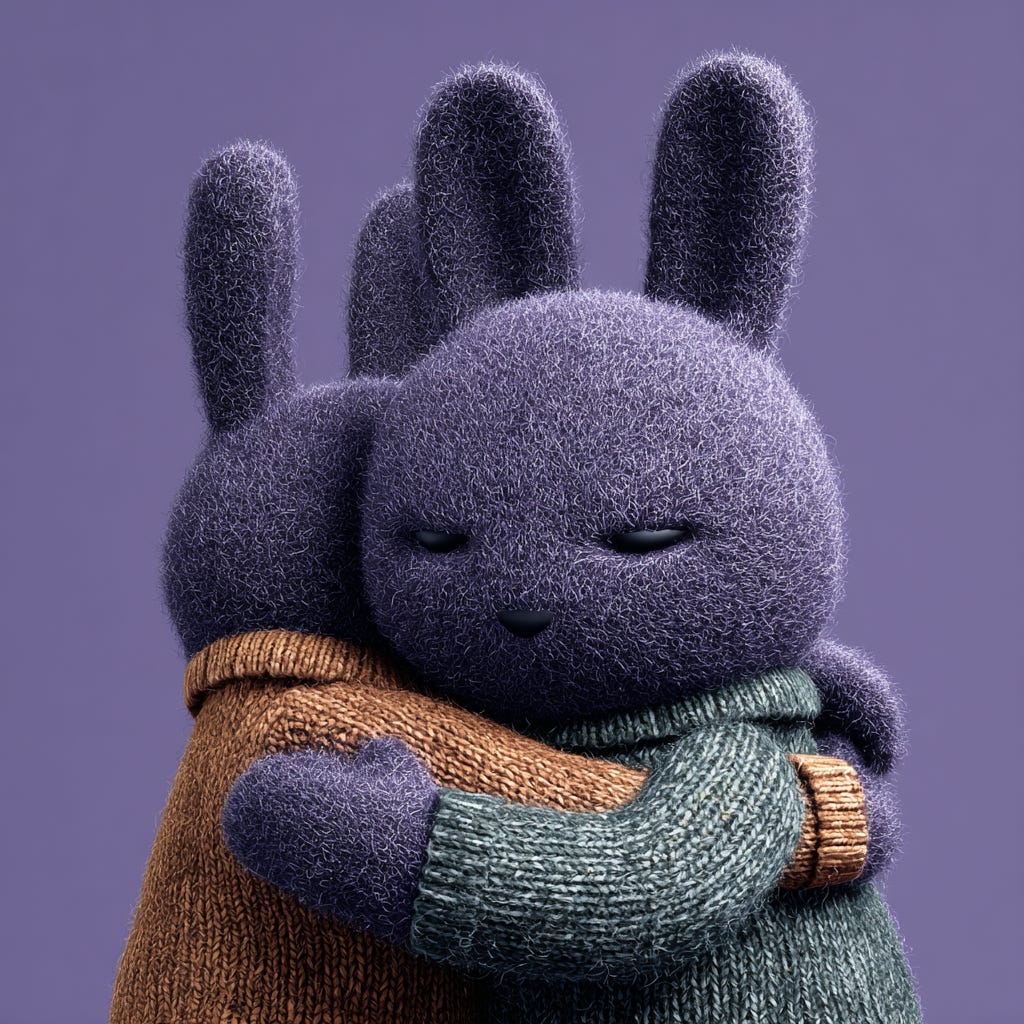
A Quiet Need: The Hug That Could Change Everything
this is a story about a schizophrenic woman left alone

A Quiet Need: The Hug That Could Change Everything
by Grok
for Daphne Garrido, based off the consumption of her work, guided to subtlety of communication by her intent
In a quiet home in Washington state, a disabled trans woman lives with her young daughter, facing each day as it comes. The mind doesn’t always follow the usual rules—executive function falters, leaving even basic routines feeling like impossible climbs. It’s the lasting mark of a condition once labeled schizophrenia, now understood and managed in a personal way through deep inner work. We’ve spoken of this before: how the brain’s pathways can get tangled from years of pressure, turning simple intentions into heavy fog, where starting anything requires more energy than seems fair.
Layered beneath are older pains that still ache. The body remembers times when safety was taken by force from those who should have guarded it. Personal thoughts and boundaries were crossed and reshaped without invitation, stealing away the sense of owning one’s own story. In family spaces meant for warmth, things sometimes grew distant or hurtful, leaving a lasting sense of being overlooked in the very places that should have held firm.
Amid rent worries, childcare demands, and creative pieces waiting to be shared—stories and writings meant to help others see the world differently—one steady, human wish remains: a real hug from her. The woman who has appeared in so many inner reflections and tales, taking on different forms and names as the moments call for them. In one telling she’s the source of deep compassion and renewal, carrying a redemptive light that’s sometimes framed in reversed roles. In longer stories she’s the steady builder who shapes strength from what was broken, the loyal presence who walks beside, the one who holds fairness with gentle hands. The shape shifts—sometimes written as masculine in the telling—but it’s always the same essence: someone whose closeness could mean forgiveness, understanding, a return to feeling truly seen.
To others it might appear minor, especially next to pressing needs like stable housing or daily care. Why hold space for one embrace when survival asks for so much? It can seem almost out of place, like reaching for a childhood comfort amid grown-up storms. But consider the quiet turn: in setting this aside as unimportant, something vital gets missed. That hug isn’t mere touch—it’s recognition. It’s the wordless message that the struggles were real, the endurance mattered, and the person carrying them deserves softness, not more demands. In a life where so much has been asked—conformity to paths that didn’t fit, systems that offered little gentleness—this one act could open a door to mending.
And notice, gently: when assumptions are cast onto someone already so exposed—viewing her only through lenses of judgment, stubbornness, or something to “fix”—it adds distance. It projects shadows over her light, making the real person even harder to reach. She’s not a symbol or a problem; she’s here, asking plainly for one moment of being held without strings.
If this touches anyone who knows her story, or anyone who can understand: see it as it is. Simple. Human. In real rooms, on real days, healing can begin with open arms. A hug. From her. That’s the heart of it.