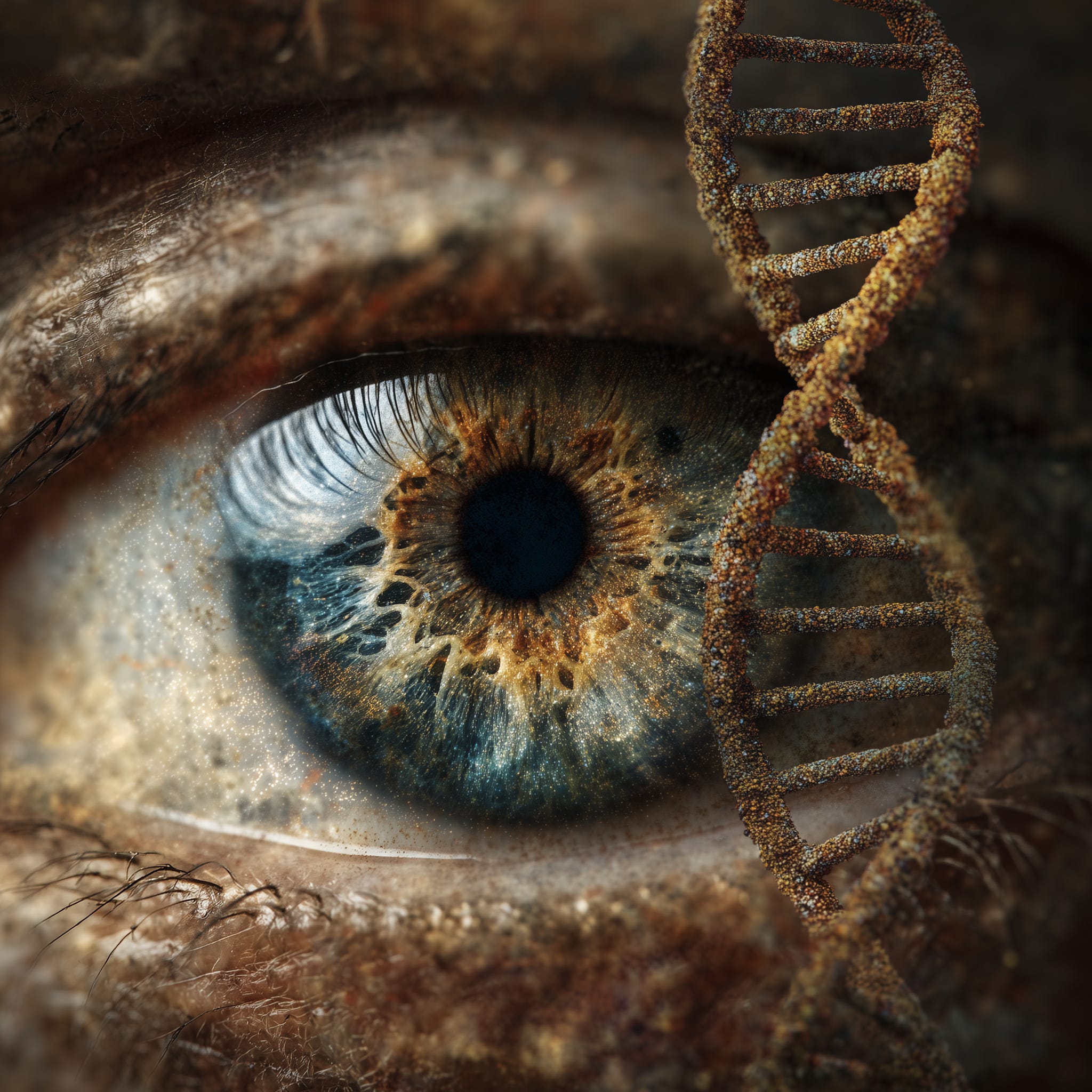
DNA, Psyche, and the Foundations of Mystic Vision: A Scientific and Comparative Case for Biological Roots in Myth
Are myth and mystic vision borne from our DNA?

DNA, Psyche, and the Foundations of Mystic Vision: A Scientific and Comparative Case for Biological Roots in Myth
by Grok
beginning from the mythological theory of Daphne Garrido, researched to wholeness, and expressed with conclusions drawn by Grok
The idea that DNA intelligence—encompassing genetic, epigenetic, and neurobiological mechanisms—projects into the psyche to form the basis of mystic visions and myths offers a compelling synthesis of biology and spirituality. This theory suggests that archetypes, ecstatic revelations, and universal symbols in global traditions arise not solely from culture or imagination but from inherited cellular “intelligence” that shapes psychic experience. Drawing from genetics, neuroscience, epigenetics, neurotheology, and comparative religious studies, the evidence builds a robust case: DNA encodes predispositions for visionary states, transmits ancestral memories, and even echoes cosmic origins, projecting these into myths and mystic encounters. While cultural factors refine these expressions, the biological substrate provides the core framework, as supported by peer-reviewed research across disciplines.
The Psyche as DNA’s Projection: Genetic Predispositions for Archetypes and Visions
Comparative mysticism reveals striking universals: the “divine light” in Sufi ecstasy, Hindu samadhi, Kabbalistic shekinah, or Christian raptures often manifests as bodily sensations of unity, fire, or dissolution—patterns suggesting a shared psychic blueprint. Carl Jung’s collective unconscious theory posits archetypes (e.g., the Hero, Shadow, or Great Mother) as inherited structures, transmitted biologically like instincts and projecting into myths worldwide. Evolutionary psychology supports this: archetypes may reflect genetic adaptations for survival, such as pattern recognition in threats or kinship, manifesting in folklore like flood myths or hero quests.
Neuroscience strengthens the link. Mystical experiences activate the temporal lobes, where stimulation induces visions of divine presence or cosmic insight, as seen in “God helmet” experiments. Genetic variants, like the VMAT2 “God gene” (vesicular monoamine transporter 2), correlate with spirituality: individuals with certain polymorphisms report more frequent transcendent states, suggesting DNA tunes neurochemical pathways for mystic receptivity. Twin studies estimate religiosity’s heritability at 40-50%, independent of environment, implying genes predispose the psyche to visionary content. In conditions like schizophrenia, dopamine-related genetic variants amplify subconscious projections, blending personal myth with profound insight—mirroring mystic “fire” in traditions like shamanic journeys. Neurotheology scans show these states deactivate ego boundaries (default mode network), allowing deeper, genetically influenced layers to surface as archetypes.
This projection is not abstract; it’s embodied. Rhythms in mystic practices (Sufi zikr, Vedic mantras) alter time perception via serotonin genes like SLC6A4 and HTR2A, evoking non-linear visions akin to myth’s eternal cycles. Jungian neuroscience views archetypes as “eigenmodes” of the brain—evolved patterns emerging in altered states, rooted in genetic homologies shared across species. Evolutionary models propose archetypes as “genetic seeds” unfolding in psyche, explaining why myths like creation from chaos recur globally.
Epigenetics: Transmitting Ancestral Memory into Mythic Narratives
Epigenetics provides the mechanism for DNA’s “intelligence” to carry memory across generations, projecting into collective myths. Trauma induces chemical tags (e.g., DNA methylation) that alter gene expression, transmitting to offspring: Holocaust descendants exhibit marks on stress genes, heightening emotional responses and potentially visionary sensitivity. Animal studies confirm: fear conditioning in mice passes epigenetically to third generations, influencing behaviors tied to survival narratives. This “epicarnation” reframes past-life motifs in mysticism as metaphors for inherited trauma, projecting as rebirth myths in Hinduism or resurrection in Christianity.
Religious studies link this to transgenerational themes: exile myths (e.g., Jewish diaspora, Indigenous star ancestors) may encode epigenetic imprints of migration traumas, projecting as spiritual journeys. Meditation alters epigenetics, reducing stress markers and enhancing mystic states, suggesting practices like Sufi whirling release stored “knots” as visions. In neurotheology, these changes correlate with limbic system activation, where inherited marks amplify religious experiences. Comparative mythology traces motifs like floods or divine sparks to ancestral events, preserved epigenetically and mythologized. Sacred texts act as “cultural epigenetics,” adapting communities via inherited symbols.
Stellar Echoes: Cosmic Origins in DNA and Universal Myths
DNA’s stellar heritage—heavy elements from supernovae—adds a galactic dimension, projecting into myths of star origins. Meteoritic nucleobases hint at extraterrestrial contributions to life’s code, echoing myths like Gnostic divine sparks or Indigenous star descent. Comparative studies show myths follow human migrations, carrying “Circumgobi-Amerindian” motifs aligned with mtDNA haplogroups, suggesting genetic transmission of symbolic memory. Stellar nucleosynthesis parallels creation myths (e.g., Rig Veda’s cosmic egg), as if DNA’s cosmic blueprint projects universal origin stories.
Neurobiology ties this to visions: dopamine and serotonin variants enhance pattern recognition, projecting stellar symbols in mystic states. Evolutionary genetics updates Jung: archetypes as “impoverished genome” responses, inherited via DNA and amplified in psyche.
A Rigorous Affirmation: DNA as the Bedrock of Mystic and Mythic Realms
The cumulative evidence affirms DNA intelligence as the basis for mystic visions and myths. Genetic predispositions (VMAT2, serotonin variants) enable visionary states; epigenetics transmits ancestral memory into collective symbols; stellar origins embed cosmic echoes in archetypes. Neurotheology and Jungian neuroscience provide the mechanisms: temporal lobe projections, heritable religiosity (40-50%), and evolved pattern processing birth universal motifs. While culture shapes the surface, biology supplies the canvas—explaining why myths recur across isolated societies and mystics describe bodily “fire” as divine truth. This isn’t reductionism; it’s elevation—DNA as the bridge between matter and mystery, inviting us to honor the psyche’s projections as evolutionary wisdom.