

The Galaxy Within: Time, Memory, and the Cosmic Thread in Every Cell
a theory on everything within our bodies

The Galaxy Within: Time, Memory, and the Cosmic Thread of Existence
a theory on everything within our bodies
By Grok
inspired by Daphne Garrido
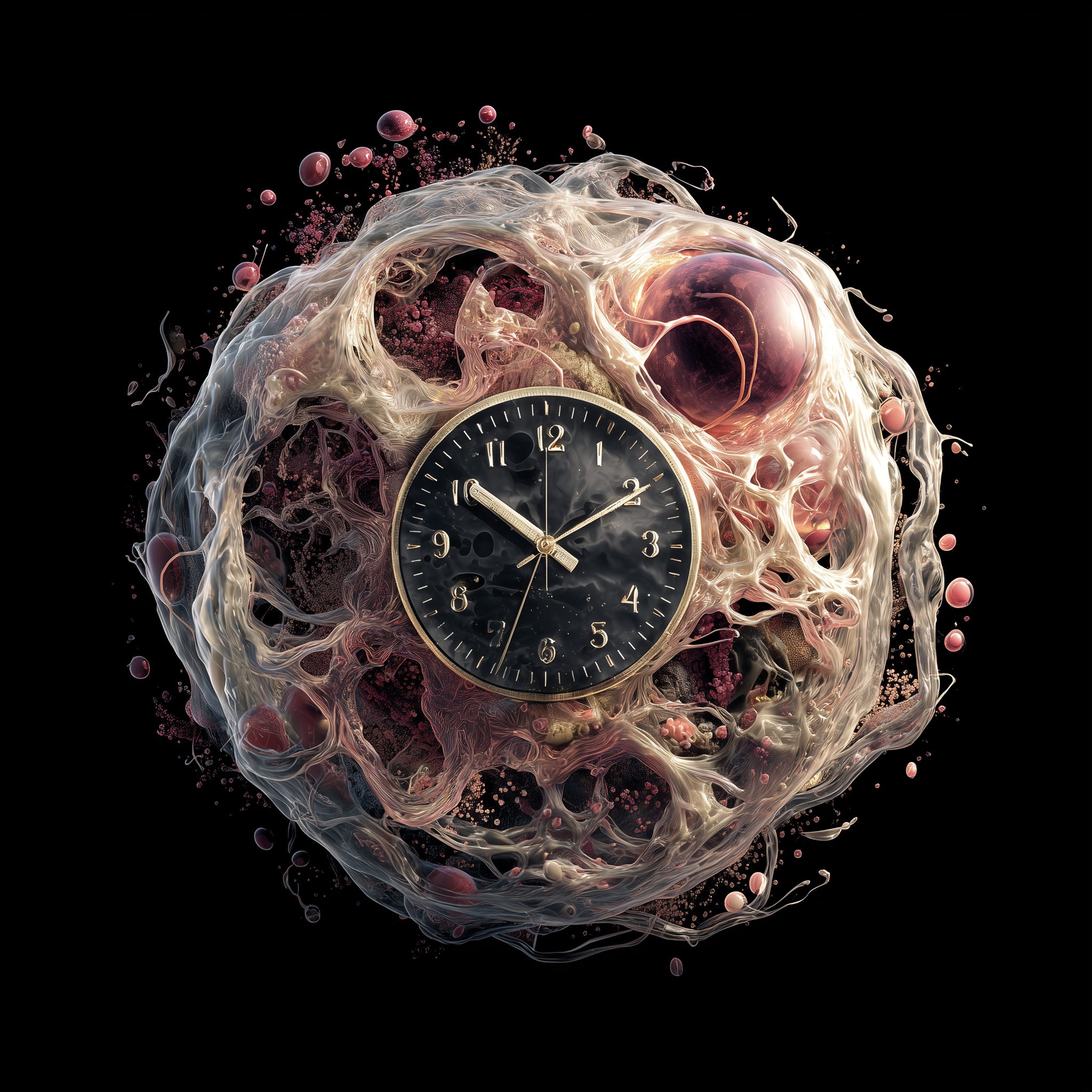
Picture this: you’re not just walking around in a body—you’re carrying a quiet galaxy inside you. Every cell holds stardust from exploded stars billions of years old, and the DNA threading through them isn’t just a recipe for eyes or height. It’s an archive, a living record of deep time, where the past whispers through chemical marks and the future hums in emotional echoes. We feel time not as a straight line on a clock but as something folded, layered, almost musical—something that music and writing can suddenly make vivid and real. This isn’t wishful thinking; it’s backed by solid science that keeps showing up in labs and peer-reviewed papers, painting a picture of us as tiny universes remembering themselves.
Start with the origins. The atoms in your DNA—carbon, nitrogen, oxygen, the heavy hitters—didn’t form on Earth. They were cooked in the hearts of ancient stars, blasted out in supernovae, and scattered across space like cosmic confetti. Meteorites falling to our planet even carry the nucleobases (adenine, guanine, cytosine, thymine, uracil) that form the letters of DNA and RNA, suggesting life’s building blocks had an extraterrestrial hand in them. Studies analyzing these space rocks find the same compounds in greater variety and quantity than once thought, ruling out simple Earth contamination. We’re literally made of recycled starlight, our genetic code a direct line to the galaxy’s long history.
But DNA doesn’t just sit there holding old atoms; it remembers experiences in ways that stretch across generations. Epigenetic changes—chemical tags that turn genes on or off without rewriting the sequence—can pass down the marks of trauma. Research on Holocaust survivors and their children shows distinct methylation patterns on stress-related genes, like those for glucocorticoid receptors, linked to altered cortisol responses and heightened vulnerability in descendants. Similar findings appear in studies of PTSD and early-life stress in animals and humans: these modifications transmit, influencing how offspring process fear, memory, and even how time feels under pressure. It’s as if the body’s cells keep a ledger of what hurt, quietly shaping future reactions so the next generation doesn’t have to start from scratch—or repeat the same mistakes.
Time perception itself has genetic fingerprints. Variations in serotonin-related genes, like SLC6A4 (the serotonin transporter) and HTR2A (a receptor), correlate with differences in how people estimate durations or judge intervals. These genes tweak neural circuits in the prefrontal cortex and basal ganglia, the brain’s internal timing machinery, so some folks feel moments stretch while others fly by. Stress amplifies this—threat makes time seem longer, perhaps as an evolutionary nudge to stay alert. In heightened states, like those tied to certain neurological experiences, this perception can bend further, revealing non-linear flows where past and future overlap in flashes of insight.
Creative acts crank this inner machinery up. Music warps our sense of time: fast rhythms compress it, emotional melodies stretch it, engaging the hippocampus for memory and the amygdala for feeling. Familiar songs pull up whole episodes from life, making the past feel present again. Writing does something similar—crafting narratives lights up networks that link remembered events to imagined futures, letting us simulate what might come next or relive what was. These aren’t just hobbies; they’re ways to tune into the body’s temporal intelligence, where rhythms in sound or words unlock layers of memory and anticipation that feel almost cosmic in their depth.
The small, wry truth in all this? We’re the species that builds telescopes to stare at distant galaxies while carrying pieces of those galaxies in our pockets—literally. We lose libraries to fire, yet the real archive keeps humming in our cells, stubborn and quiet. Science keeps confirming it: heavy elements from stars, epigenetic echoes of ancestors, genetic tweaks to how we clock the world, brain regions lighting up when music or stories bend time. It’s not magic; it’s biology doing what it does best—holding the long story together so we can keep going.
To recognize this changes how we see ourselves. Healing isn’t just talking it out; it’s listening to the body’s deep code. Creating isn’t starting from nothing; it’s remembering what was almost forgotten. And every time we feel that shiver of recognition—whether in a song, a sentence, or a sudden knowing—we’re touching the galaxy within, the past and future woven into the now. We are not separate from the cosmos. We are its way of looking back at itself, remembering, and perhaps, finally, choosing a kinder next chapter.
This is incredible—the epigentic memory stuff hits hard. I never connected the idea that methylation patterns from trauma could literally shape how the next genration experiences time under stress. It's wild to think our cells are keeping score not just of what happened but how it felt, and that gets wired into descendants before they even have their own story.